


Differentiating 303, 304, & 316 Stainless Steel
Class 300 stainless steels are austenitic chromium-nickel alloys that are highly corrosion resistant and non-magnetic, displaying excellent formability and temperature resistance. Three of the most common austenitic stainless steels are types 303, 304, and 316. Although related, these alloys differ in areas like chemical composition, material capabilities, and cost.
Type 303
The base composition of type 303 stainless steel is approximately 18% chromium and 8% nickel. The additions of 0.15% sulfur or selenium and phosphorus make type 303 the most machinable alloy of the class but slightly reduce its corrosion resistance. Despite this, it is still an optimal material for components that require significant machining or tight tolerances, such as nuts and bolts, screws, bushings, fasteners, bearings, and more. Type 303 is regarded as a cheaper, more machinable alternative to similarly composed 304 stainless steel.
Type 304
The most commonly used austenitic stainless steel, type 304, is composed of 18% chromium and 8% nickel with low levels of carbon. This alloy is highly resistant to oxidation and corrosion, durable, and easy to fabricate. Considered the most versatile stainless steel of the class, type 304 has uses in a range of applications across diverse industries—from architectural details to kitchen appliances to automobile parts. Type 304 is easily accessible and less expensive than 316 stainless steel.
Type 316
Composed of slightly higher levels of chromium (16-18%) and nickel (10-14%) than types 303 and 304, the most distinguishable properties of 316 stainless steel come from the addition of 2-3% molybdenum, an element which significantly improves the alloy’s corrosion resistance. Type 316 also exhibits improved heat tolerance, resistance to creep and pitting, and excellent tensile strength. Known for its ability to withstand the effects of exposure to chlorides, the alloy is used extensively in chemical and marine applications, as well as a number of other industries. Type 316 has lower formability than 303 or 304 stainless steels, but its higher resistances make it more expensive to source.
The characteristics responsible for differentiating these common class 300 stainless steels also uniquely position each alloy to perform for specific applications.
Applications of 303 Stainless Steel
The highly machinable, non-magnetic, and non-hardening type 303 stainless steel is well-suited to applications requiring tight tolerances and heavy machining, like in the manufacturing of small parts. Typical uses of this alloy include things like:
Applications of 304 Stainless Steel
The extreme versatility of type 304 makes it the most widely used stainless steel on the market. Offering exceptional corrosion resistance and durability, this alloy is suitable for a spectrum of uses across nearly every industry. Some of the most common applications are:
- Robotics systems and equipment
- Food processing
- Wastewater treatment
- Packaging equipment
- Automotive parts
- Optical systems
- Building conveyorsand heavy equipment
Applications of 316 Stainless Steel
Offering the greatest resistance to a variety of corrosive elements, type 316 stainless steel is the most appropriate alloy for applications with continuous exposure to harsh environments or where strength and hardness are a critical factor. This includes uses such as:
- Stainless steel floats
- Marine parts
- Outdoor electrical enclosures
- Chemical and pharmaceutical equipment
- Medical devices and equipment
Stainless Steel Components by Stafford Manufacturing Corp.
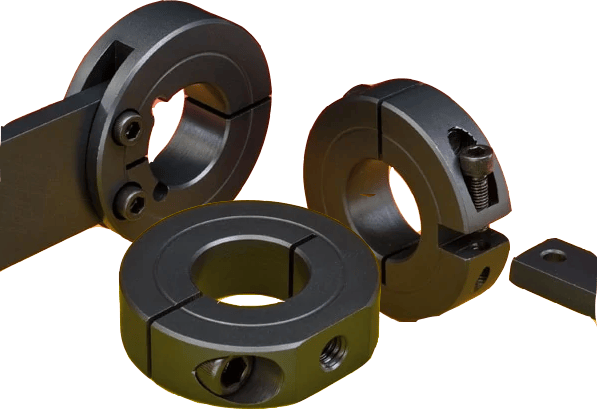
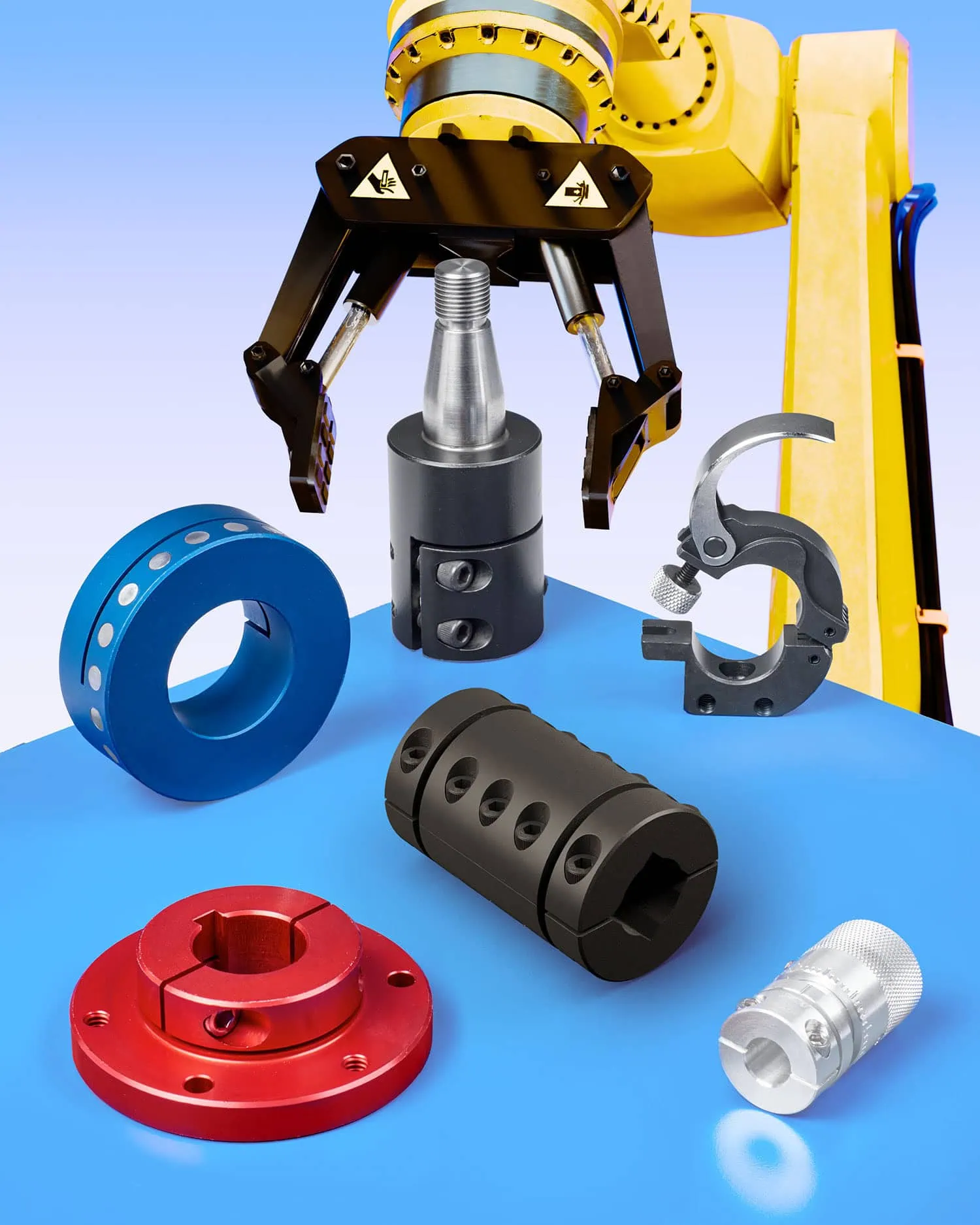
Stafford Manufacturing Corp. is a global manufacturer and distributor of shaft collars, rigid shaft couplings, and specialty mechanical components used in OEM and MRO applications for industrial and consumer products. The inclusion of types 303, 304, and 316 stainless steels in our standard and custom components plays a pivotal role in enhancing their quality and durability. Our selection of stainless steel products includes:
- Threaded bore shaft collars
- Two-Piece Split Clamp Collars
- Set Collars
- Hinge Collars
- Square and hexagonal bore shaft collars
- Rigid shaft couplings and shaft adapters
- Metric shaft collars, rigid shaft couplings, and components
For additional information on stainless steel material considerations for your next application, or to learn more about the Stafford advantage, contact us today.
