-
Products
-
Round Bore Shaft Collars
Round Bore Shaft Collars
- One-Piece Split Shaft Collars
-
Two-Piece Split Shaft Collars
Two-Piece Split Shaft Collars
-
Hinged Shaft Collar
Hinged Shaft Collar
- Threaded Bore Shaft Collar
- Set Screw Shaft Collars
- Weldable Shaft Collars
- Metric Round Bore Shaft Collar
- Wrenching Collars
- Flanged Round Bore Shaft Collar
- Hub Collars
- Remachinable Shaft Collars
- Pipe Collars
- Quick Adjust Shaft Collars
-
Rigid Shaft Couplings
Rigid Shaft Couplings
- Shaft Adapters
-
Rigid Shaft Couplings
Rigid Shaft Couplings
- One-Piece Split Coupling
- One-Piece Split Coupling with Keyway
- Two-Piece Split Coupling
- Two-Piece Split Coupling with Keyway
- Three-Piece Split Coupling
- Three-Piece Split Coupling with Keyways
- Metric Rigid Shaft Couplings
- Remachinable Couplings
- One-Piece Split Inch-Metric Conversion Couplings
- Two-Piece Split Inch-Metric Conversion Couplings
- Precision Sleeve Couplings
- Square and Hex Bore Couplings
- Rigid Shaft Adapters
- Set Couplings
-
Quick Adjust Products
Quick Adjust Products
-
Threaded Bore Shaft Collars
Threaded Bore Shaft Collars
-
Flanged Devices & Mounting Components
Flanged Devices & Mounting Components
-
Square and Hex Bore Collars & Couplings
Square and Hex Bore Collars & Couplings
-
Metric Products & Components
Metric Products & Components
-
Maintenance, Repair, Retrofit & Accessories
Maintenance, Repair, Retrofit & Accessories
-
Round Bore Shaft Collars
- Custom Capabilities
- Engineering
- CAD
- Press Releases
- Sales Channels
- Resources
- About Us
- Contact Us
-
Products
Products
-
Round Bore Shaft Collars
Round Bore Shaft Collars
- One-Piece Split Shaft Collars
-
Two-Piece Split Shaft Collars
Two-Piece Split Shaft Collars
-
Hinged Shaft Collar
Hinged Shaft Collar
- Threaded Bore Shaft Collar
- Set Screw Shaft Collars
- Weldable Shaft Collars
- Metric Round Bore Shaft Collar
- Wrenching Collars
- Flanged Round Bore Shaft Collar
- Hub Collars
- Remachinable Shaft Collars
- Pipe Collars
- Quick Adjust Shaft Collars
-
Rigid Shaft Couplings
Rigid Shaft Couplings
- Shaft Adapters
-
Rigid Shaft Couplings
Rigid Shaft Couplings
- One-Piece Split Coupling
- One-Piece Split Coupling with Keyway
- Two-Piece Split Coupling
- Two-Piece Split Coupling with Keyway
- Three-Piece Split Coupling
- Three-Piece Split Coupling with Keyways
- Metric Rigid Shaft Couplings
- Remachinable Couplings
- One-Piece Split Inch-Metric Conversion Couplings
- Two-Piece Split Inch-Metric Conversion Couplings
- Precision Sleeve Couplings
- Square and Hex Bore Couplings
- Rigid Shaft Adapters
- Set Couplings
-
Quick Adjust Products
Quick Adjust Products
-
Threaded Bore Shaft Collars
Threaded Bore Shaft Collars
-
Flanged Devices & Mounting Components
Flanged Devices & Mounting Components
-
Square and Hex Bore Collars & Couplings
Square and Hex Bore Collars & Couplings
-
Metric Products & Components
Metric Products & Components
-
Maintenance, Repair, Retrofit & Accessories
Maintenance, Repair, Retrofit & Accessories
Press ReleasesRound Bore Shaft Collars Read MoreRigid Shaft Couplings Read MoreQuick Adjust Products Read MoreThreaded Bore Shaft Collars Read MoreFlanged Devices & Mounting Components Read MoreSquare and Hex Bore Collars & Couplings Read MoreMetric Products & Components Read MoreMaintenance, Repair, Retrofit & Accessories Read More -
Round Bore Shaft Collars
-
Custom Capabilities
Custom Capabilities
- Standard Part Modifications
- Materials & Surface Treatments
- Machined Components
- Sheet Metal Components
- The SPARC™ Story
- Fully Custom Products
- Rigid Shaft Coupling Configurator
Press ReleasesStandard Part Modifications Read MoreMaterials & Surface Treatments Read MoreMachined Components Read MoreSheet Metal Components Read MoreThe SPARC™ Story Read MoreFully Custom Products Read MoreRigid Shaft Coupling Configurator Read More -
Engineering
Engineering
- Collar and Coupling Styles
- Materials and Finishes
- Weldability
- Axial Holding Power
- Torsional Holding Power
- Fits and Tolerances
- Hardware
- Rigid Shaft Coupling Configurator
- Shaft Collar and Coupling Basics
- Screw Seating Torque – Clamp-Type Shaft Collars
Press ReleasesCollar and Coupling Styles Read MoreMaterials and Finishes Read MoreWeldability Read MoreAxial Holding Power Read MoreTorsional Holding Power Read MoreFits and Tolerances Read MoreHardware Read MoreRigid Shaft Coupling Configurator Read MoreShaft Collar and Coupling Basics Read MoreScrew Seating Torque – Clamp-Type Shaft Collars Read More -
CAD
CAD
-
Press Releases
Press Releases
Press Releases Customizable Flange CollarsRead More
A full line of customizable flange shaft collars that incorporate an integral clamp, maintain their perpendicularity, and are easy to adjust has been introduced by Stafford Manufacturing Corp. of Wilmington, MA.
 Automation SystemsRead More
A broad line of mechanical components for use as stops, spacers, shaft connectors, and versatile mounting devices in warehouse automation systems has been introduced by Stafford Manufacturing Corp. of Wilmington, MA.
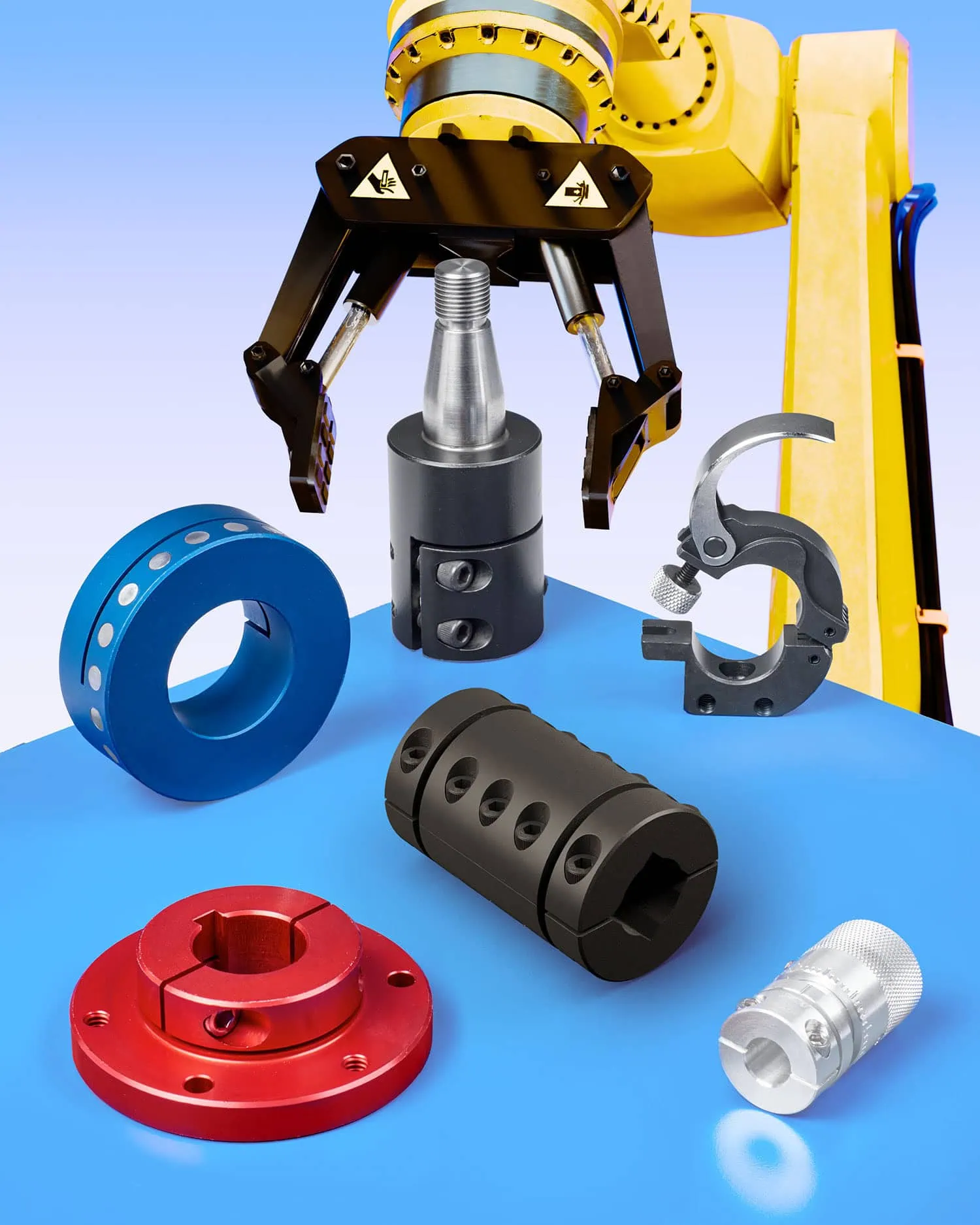 Collars and Couplings for Robotic ApplicationsRead More
A wide range of standard and custom shaft collars, couplings, and mounting devices that are suited for use in robotic systems and equipment have been introduced by Stafford Manufacturing Corp. of Wilmington, MA.
-
Sales Channels
Sales Channels
-
Resources
Resources
- Library
- Blog
- Videos
- What Type of Shaft Collar Should I Use?
- Certifications, Registrations & Compliance
- What is a Coupling?
- Competitor Cross Reference
- Shaft Coupling Comparison Guide
- Rigid Shaft Coupling Configurator
-
Press Releases
Press Releases
Press ReleasesLibrary Read MoreBlog Read MoreVideos Read MoreWhat Type of Shaft Collar Should I Use? Read MoreCertifications, Registrations & Compliance Read MoreWhat is a Coupling? Read MoreCompetitor Cross Reference Read MoreShaft Coupling Comparison Guide Read MoreRigid Shaft Coupling Configurator Read MorePress Releases Read More - About Us
- Contact Us